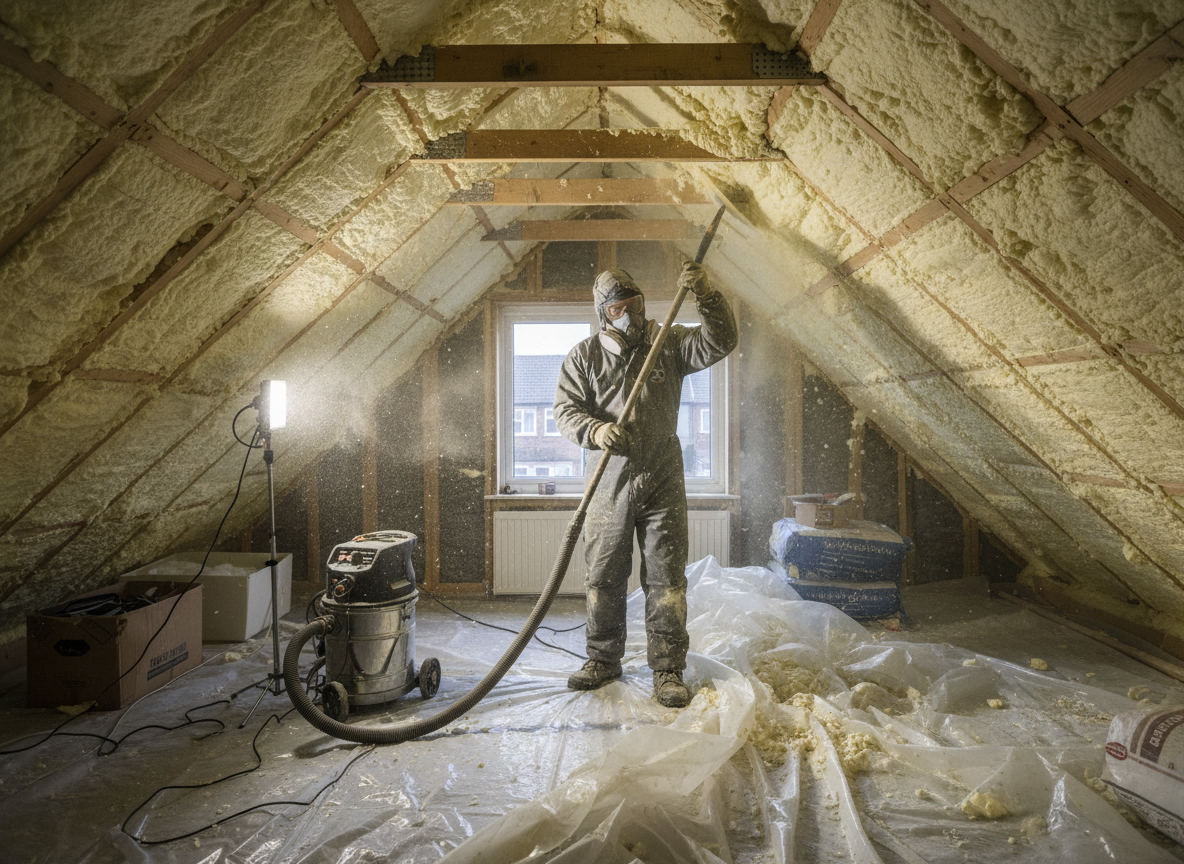
Hull's Victorian and Edwardian terraces often have spray foam applied directly to rafters in the early 2000s to meet insulation targets. Over time the closed-cell material bonds tightly to timber and can hide damp patches from the Humber estuary climate. Removal requires cutting the foam into manageable sections while protecting original lath and plaster ceilings below, then disposing of it as construction waste under local Yorkshire regulations.
Electric cables and junction boxes are frequently buried inside the foam layer in these older lofts. A full inspection with torches and moisture meters comes first so live wiring is isolated before any cutting begins. In narrow attic spaces common to Hull's back-to-back houses, portable extraction units with HEPA filters are used to capture dust and prevent it settling into living areas on the floors below.
Once the bulk foam is gone, rafters are checked for rot and cleaned of residue that could affect new insulation. Ventilation gaps are restored to meet current Building Regulations, especially important in properties near the river where condensation forms quickly in winter. Homeowners receive a written report noting any timber repairs needed before fresh insulation is considered.
Edge cases include foam that has expanded behind fascia boards or into eaves, requiring scaffold access from the street in tight Hull terraces. Attempting DIY removal often damages felt or tiles, leading to leaks that only appear months later during heavy rain.
Technician insight
In Hull, the thing that catches most people out with Attic spray foam removal is how quickly closed-cell foam hides rot in 100-year-old rafters once the Humber damp gets behind it. Homeowners often think the foam is still doing its job until they see staining on bedroom ceilings below.
Hessle Road Terrace Loft
Owner reported musty smells after heavy winter rain. Inspection found closed-cell foam trapping moisture against original rafters in a 1920s terrace. We isolated electrics, cut out the foam in sections, cleaned residue and restored eaves ventilation. The loft dried out and the smell disappeared within weeks.
How it works
- 1
Site Inspection
Measure attic volume, locate wiring and check for hidden damp in Hull lofts.
- 2
Containment Setup
Seal stairwell and floor hatches to stop dust migrating into living spaces.
- 3
Foam Extraction
Cut and remove sections using specialist tools, bagging waste on site.
- 4
Clean and Ventilate
Wipe rafters, restore airflow gaps and confirm moisture levels are safe.
- 5
Final Report
Document condition of timber and advise on next insulation steps if required.
Pricing
Cost depends on attic size, foam depth and access difficulty in older Hull buildings; upfront quotes given after inspection.