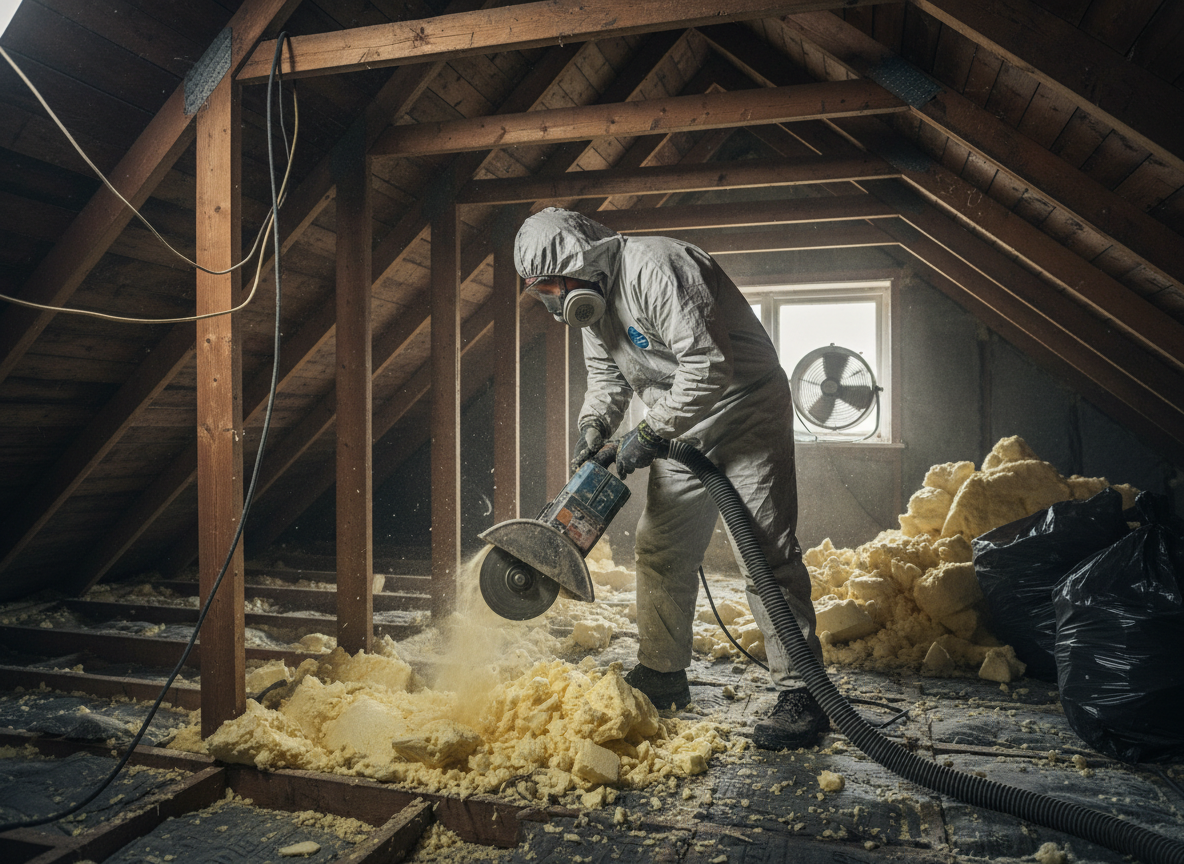
Closed cell spray foam bonds tightly to joists, brickwork and roof timbers in Hull's older terraced houses. Removing it requires cutting back without damaging original lath and plaster or exposing damp masonry that has been sealed for years. In properties around the Old Town and nearby streets, the foam often fills eaves and party wall voids that were never meant to be airtight, so crews must plan for controlled ventilation once the material is gone.
Hull's frequent rain and high water table make post-removal checks essential. Closed cell foam can hide timber decay or rising damp that only appears after the insulation is stripped. Teams working from 94 Alfred Gelder Street carry moisture meters and torches to inspect every exposed surface before any new insulation goes in. Homeowners in areas like Newland and Sculcoates frequently discover that the original roof felt has deteriorated underneath the foam layer.
Disposal of closed cell foam offcuts follows strict waste rules in the Hull area. The material is bulky and cannot be mixed with general building waste, so vans return to licensed sites rather than leaving debris on site. Access through narrow loft hatches common in Victorian terraces often means cutting the foam into smaller sections and bagging it on the spot to keep dust and particles contained inside the property.
After removal, many Hull homeowners choose breathable insulation alternatives that suit solid-wall construction. The switch prevents the condensation problems that closed cell foam sometimes creates when it stops the building from drying outward. Crews advise checking for any remaining adhesive residue on rafters so new materials can be fixed cleanly without trapping pockets of air.
Technician insight
In Hull, the thing that catches most people out with closed cell spray foam removal is how Victorian terraces in the Old Town and Newland have narrow eaves that trap moisture once the foam is gone. Homeowners often expect a quick strip-out but the real work is spotting where the foam has been holding damp against the brickwork for years.
Old Town Terrace Loft
Closed cell foam filled the eaves of a 1890s terrace near Queen Victoria Square. After cutting it back, water staining appeared on the rafters that had been sealed in. We extracted the foam in sections, dried the timbers and left the loft ventilated so the owner could fit a breathable alternative.
How it works
- 1
Site Survey And Access Check
Inspect loft spaces, eaves and wall voids in the Hull property to map foam coverage and note any restricted access points typical of older terraces.
- 2
Controlled Cutting And Extraction
Slice foam into manageable sections using specialist tools while protecting original timbers and containing dust within the work area.
- 3
Moisture And Timber Inspection
Check exposed surfaces for hidden damp or rot that the closed cell foam may have concealed, especially in properties near the Humber.
- 4
Waste Removal And Site Clear
Bag and remove all foam offcuts to licensed disposal points, then leave the space ready for follow-up ventilation or new insulation.
Pricing
Cost depends on property age, foam depth and access difficulty in Hull terraces.