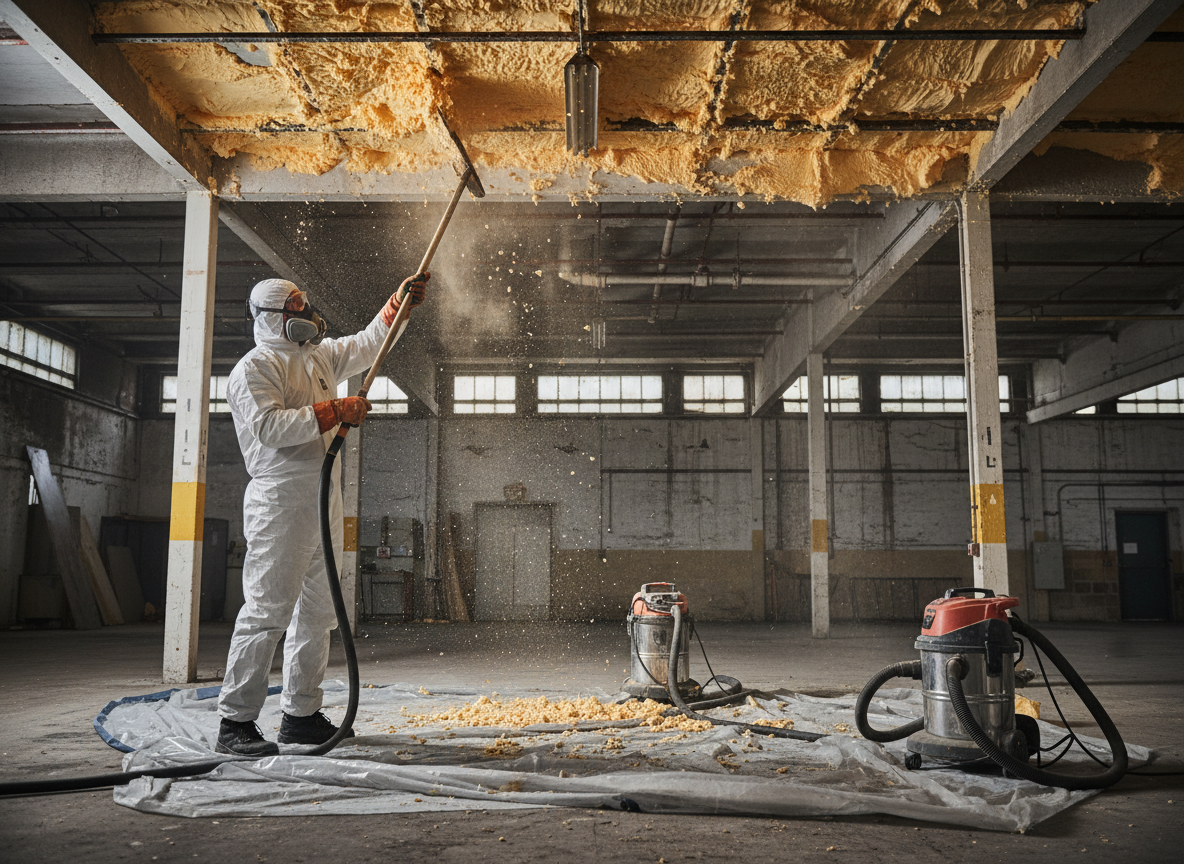
Warehouses in Hull often feature older brick or steel-framed structures from the city's port and manufacturing history, where spray foam was applied to roofs and walls for insulation. Removing it requires careful assessment of adhesion to metal cladding or concrete, especially in buildings exposed to the damp conditions from the Humber estuary. Technicians must account for potential hidden voids and ensure structural elements remain intact during extraction to avoid compromising the building envelope.
Seasonal weather patterns in the Hull area, with frequent rain and high humidity, can make foam removal more challenging as moisture trapped beneath the foam leads to mould growth or weakened substrates. Work often involves containment barriers and negative air pressure to manage dust and debris in large open spaces typical of warehouse layouts. Local operators familiar with these conditions plan for extended drying times after removal to prepare surfaces for any follow-up treatments.
Edge cases in Hull warehouses include foam applied over older asbestos-containing materials or in areas with limited access due to racking systems and machinery. Proper disposal follows UK regulations for construction waste, with crews separating foam from other debris on site. Thorough inspection of ventilation systems and floor drains prevents contamination spread in these industrial settings.
Technician insight
In Hull, the thing that catches most people out with Warehouse spray Foam removal is the persistent damp from the Humber estuary making foam bond tighter to metal roofs than expected. Older dockside warehouses often have hidden condensation pockets that turn a straightforward job into a multi-day extraction once you start cutting in.
Dockside Warehouse Foam Removal
A Hull warehouse near the old port showed widespread roof foam failure with water staining. Inspection revealed moisture trapped under the foam due to estuary humidity. Crews used staged mechanical stripping with containment to clear the foam without damaging steel purlins. The space was left clean and dry for new insulation installation.
How it works
- 1
Site Assessment
Inspect the warehouse structure, foam thickness, and any moisture damage from Hull's coastal climate before planning removal.
- 2
Containment Setup
Install barriers and extraction equipment to isolate the work area and control dust in large industrial spaces.
- 3
Foam Extraction
Use mechanical and manual methods to strip foam from walls, ceilings, and roofs while protecting underlying surfaces.
- 4
Cleanup and Disposal
Remove debris, clean surfaces, and handle waste disposal in line with local Yorkshire regulations.
Pricing
Pricing varies by warehouse size, foam depth, and access difficulty in Hull buildings.